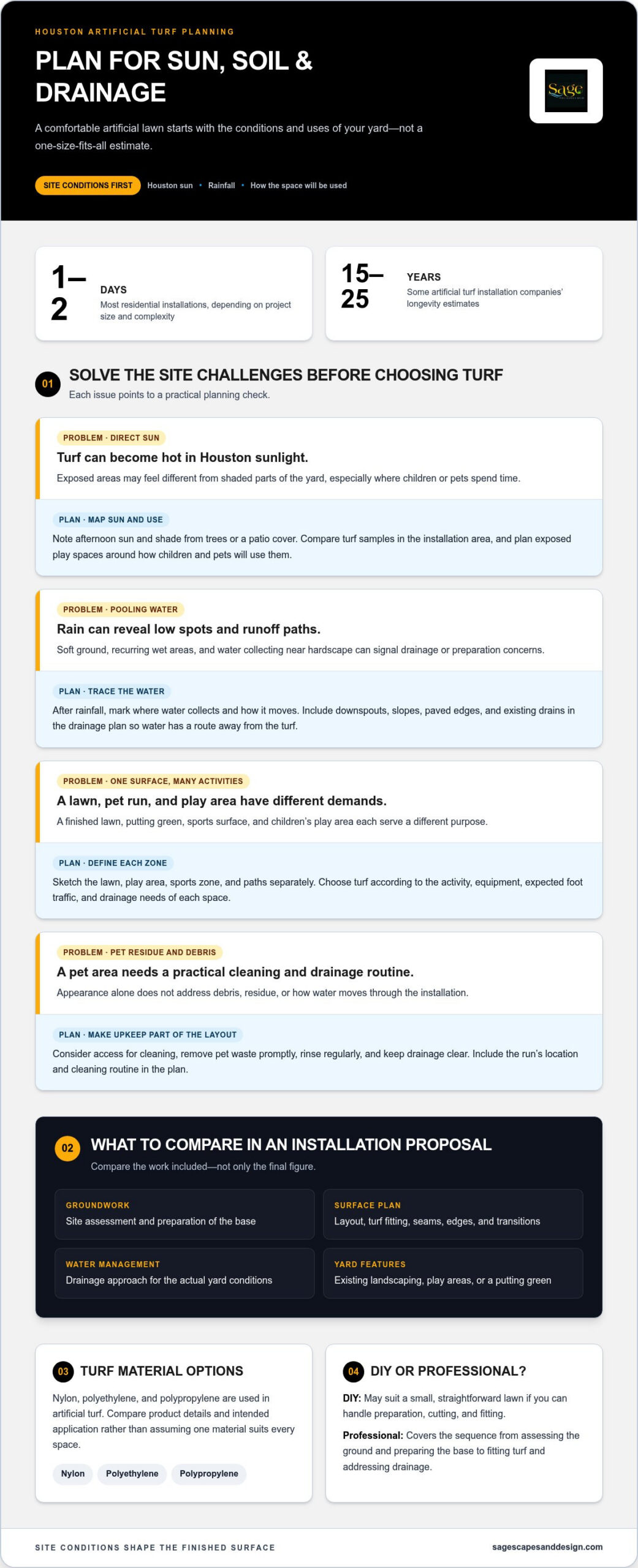
An artificial grass installation in Houston typically takes 1-2 days, depending on the project’s size and complexity. Houston’s direct sun can also make artificial turf hot, so the location and intended use of the lawn matter when planning the space. The right estimate starts with the conditions of your yard, not a one-size-fits-all figure.
It makes sense to want a low-maintenance landscape that still feels comfortable and considered. This guide explains what artificial grass installation in Houston involves, how heat and sun affect turf, and which project details shape an estimate, including area, site preparation, layout, and drainage. You’ll also learn how a tailored design can help artificial grass complement the rest of your outdoor space, so you can make a confident decision about your next step.
Key Takeaways
- Understand the installation steps and site conditions that shape a finished artificial lawn.
- Plan for Houston sun, soil, and rainfall when considering turf placement and drainage.
- See how yard size, preparation, access, and design choices influence a project estimate.
- Compare the considerations for new turf with those involved in replacement, repair, or clearing.
- Explore how artificial grass can complement a broader backyard design, including pool and landscape plans.
Need Artificial Grass Installed?
Houston turf projects can serve lawns, pet runs, putting greens, sports surfaces, and children’s play areas. Most residential installations take 1-2 days, depending on project size and complexity.
DIY may suit a small, straightforward lawn if you can handle site preparation, cutting, and fitting. Professional installation covers the full sequence, from assessing the ground and preparing the base to fitting the turf and addressing drainage.
Permit requirements depend on the scope of site work and property conditions, while HOA restrictions depend on community documents. Treat them as separate questions before planning changes to a Houston yard.
Turf for Lawns, Sports, and Play
Start by matching the turf’s intended use to how people will move across it. A lawn needs a finished appearance, while a putting green needs a surface suited to putting practice. For sports and playground areas, choose based on the activity, equipment, and expected foot traffic.
For example, map the play area, sports zone, and lawn separately before choosing materials. This helps define the surface each space needs and where transitions between uses should go.
Pet-Friendly Turf and Odor Control
For a pet run, consider how easily you can remove debris and how water will drain through the installation. Clean up pet waste promptly, and rinse regularly to clear residue. Include the run’s location and cleaning routine in the layout plan.
Odor control starts with practical maintenance and drainage, not appearance alone. A narrow side yard used by dogs, for example, may need a different cleaning plan than a decorative front lawn.
Turf Choices for Houston Conditions
For Houston’s heat, rain, pets, and children, choose artificial turf according to the space’s use and drainage needs. Turf can become hot in direct sunlight, so consider shade and how children or pets will use exposed areas.
Nylon, polyethylene, and polypropylene are materials used in artificial turf. Compare the intended application and product details rather than assuming one material suits every lawn, play area, or pet space.
Houston Installer Comparisons
Compare Houston installers by the work included in their proposed scope: site preparation, surface layout, turf fitting, and drainage planning. Ask how the plan accounts for existing landscaping, play areas, or a putting green so proposals cover the same parts of the yard.
Look for clear explanations of each installation step and how seams, edges, and transitions will be handled. A proposal that separates preparation from turf selection makes it easier to understand what shapes the finished surface.
How does Artificial Turf perform in Houston heat and sun?
Artificial turf in direct sunlight can become hot. In a Houston backyard, note which areas receive afternoon sun and which are shaded. A patio cover or mature tree can influence where children and pets spend time. Map those patterns before selecting turf or placing play equipment.
Heat comfort depends on sun exposure and intended use. A sunny play area, for example, may need shade planning, while a less-used side yard may have different priorities. Compare samples in the installation area, then consider how their color and texture look beside paving, planting beds, and fences.
Soil conditions affect preparation because installation starts below the visible turf. Walk the site after rainfall and note where water collects, where it moves, and where the ground stays soft. These observations help identify low spots and guide drainage planning before the surface is installed.
Drainage matters during heavy rain and Gulf Coast storms. Water needs a route away from the turf rather than a place to pool beneath it. Identify downspouts, slopes, paved edges, and existing drains, then plan how runoff can move across or away from the proposed surface without collecting at seams or boundaries.
Muddy conditions often point to a surface-water or soil-preparation issue. Mark recurring wet spots and check whether nearby hardscape directs runoff into the backyard. A durable installation depends on preparing the base for the actual site, not simply covering soft ground with synthetic turf.
Make the site assessment more useful by recording sun exposure, wet areas, and how each zone will be used. A lawn for walking has different demands from a pet run or children’s play area. Mark those uses separately on a simple site sketch, including gates, planting beds, and access paths.
For an artificial grass installation in Houston, drainage and sun exposure should shape the layout alongside appearance. A covered patio can create shade beside an exposed lawn, while landscape lighting can support evening use without changing the turf’s daytime exposure. Explore artificial grass installation as part of a considered outdoor plan.
Include routine upkeep in the plan rather than treating the surface as maintenance-free. Maintaining artificial turf means removing dust, leaves, and other debris and keeping drainage clear. In a Houston yard, account for upkeep alongside sun exposure and runoff patterns. Clearing debris and checking drainage also help you spot areas where water may collect.
Budget and expected service life are also useful points to weigh when comparing installation choices. Some artificial turf installation companies estimate its longevity at 15 to 25 years. Treat these figures as planning context, alongside site conditions and how each part of the yard will be used. Reviewing upkeep, cost, and estimated longevity together can help keep the decision focused on the intended use and the practical demands of the finished space.
Professional artificial grass installation estimates
A project estimate should reflect the actual yard, preparation work, turf choice, and desired finish. In Houston, compare proposals by what each scope includes, not by the final figure alone.
Installation Cost Estimates
The price depends on the project and is provided after a quote request. Key cost factors include the area’s dimensions, existing surface, access, ground preparation, drainage work, turf selection, and installation details such as edges and seams.
For a useful estimate, measure the lawn and mark features that affect the work. Include planting beds, gates, trees, paved paths, and uneven sections. A compact space with clear access can require different preparation from a broad backyard with established landscaping.
Site clearing can also affect the scope. Removing existing lawn, disposing of debris, or adjusting the ground adds work beyond laying synthetic grass. Ask for the proposal to distinguish preparation from materials and installation so you can see how each decision contributes to the finished surface.
Use the same project description when reviewing estimates. For example, specify whether the plan includes a pet area, putting greens, or transitions beside a patio. Comparing similar scopes makes differences in turf selection, drainage planning, and finish easier to understand.
Free Local Estimates
“Free estimate” describes a particular pricing arrangement, not a universal feature of Houston turf work. A quote request should clarify what the estimate covers and whether it includes a site visit, measurements, preparation, materials, and installation.
Prepare a short project brief before requesting an estimate. Note the intended use, approximate layout, existing surface, access points, and drainage concerns. Photos can show features such as a narrow side gate or a low area where water gathers, helping frame the discussion.
During the estimate process, focus on how the proposed work addresses your space. A lawn designed for quiet landscaping may not need the same details as an active pet area or putting green. Explain how you’ll use the yard and ask for the scope to reflect those priorities.
Before comparing proposals, confirm that each describes the same work, including removal, site preparation, turf, edging, and cleanup where applicable. A clear scope helps you understand what will transform the yard and the finish the installation is designed to deliver.
New installations, replacements, repairs, and site clearing
A new synthetic turf project starts with the existing yard, not the roll of grass. Mark the area, note gates and paths, and identify planting beds, trees, and low spots. These details help define what must be cleared and how the finished surface connects with the rest of the outdoor space.
Site clearing can include removing existing lawn, loose debris, and unwanted surface material. The next step is preparing a stable base and addressing drainage concerns before laying turf. For example, a yard with a worn lawn and a sunken corner needs different preparation from a clean, level space beside a patio.
Replacement work begins with examining the existing installation. Look for lifted edges, visible seams, uneven areas, or spots where water collects. These signs help distinguish a localized repair from a broader replacement. If a seam has separated, the affected area may need attention; widespread deterioration can require removing more synthetic turf and preparing the surface again.
Repairs should address the cause as well as the visible damage. A loose edge beside a walkway, for instance, calls for checking the transition and underlying base, not just pressing the turf back into place. For recurring wetness, review nearby slopes and runoff paths before replacing the surface. Removing leaves and debris also makes the installation easier to inspect.
One Houston turf installation project was completed in 1.5 days after scheduling. That example describes a single project, not a timeline for every yard. The amount of clearing, preparation, repair, or replacement changes the work involved. A compact area with clear access differs from a backyard with old turf, planting beds, and several surface transitions.
Before work begins, document what stays and what goes. Mark the planned turf edges, outdoor features, and any damaged sections. This clarifies the scope and helps separate site clearing from new installation. It also gives the project team a practical reference when shaping the finish around walkways or existing landscaping.
Artificial turf cost reflects the project scope, including removal, base preparation, drainage work, and the extent of replacement. A small repair and a full surface renewal involve different tasks. Describe the affected areas and note where problems appear after rain; these details help define the work needed for a durable, cleanly finished yard.
Artificial grass installation in Houston
Plan the lawn as part of the backyard’s overall composition, not as an isolated green surface. A thoughtful Custom Backyard Design can define where turf meets stone, planting beds, and outdoor seating. For example, a crisp turf edge beside a curved patio can make the transition feel intentional while keeping each area distinct.
Consider how the space will look from inside the home as well as from the yard. A view through sliding doors may make the turf’s shape, surrounding plants, and nearby structures especially visible. Aligning these elements creates a more cohesive setting and supports Luxury Outdoor Living without requiring every part of the yard to serve the same purpose.
Homeowners can also plan artificial grass around a pool or spa they may add later. Leave a clear route between the house, seating, and water, and consider how the turf edge will meet hard surfaces. Coordinated Pool and Landscape Design can help the lawn feel connected to these features rather than like a separate installation.
Think about the character you want each area to convey. A simple, open lawn can provide a calm visual counterpoint to detailed planting, while a defined play space can sit apart from a more formal entertaining area. The layout should reflect everyday routines, such as where children gather or where guests approach the patio.
Edges and transitions help establish a consistent design. A straight boundary can complement a geometric walkway, while a gently shaped edge may suit curved garden beds. Decide where the turf should stop before finalizing the surrounding layout. That choice affects the visual balance between greenery, paving, and planted areas.
For a resort-style backyard, use turf as one element in a considered arrangement. Layered planting, shaded seating, and clear paths can give different zones their own purpose. Keep the overall palette and proportions in mind so the lawn supports the atmosphere rather than competing with focal features.
Before committing to the final layout, review the yard at different times of day and from key viewpoints. Notice which features draw attention and where a transition feels abrupt. These observations can guide small design adjustments, helping the finished outdoor space feel composed, practical, and suited to your home.
Sage Pools, Scapes & Design: Pool Design+Build
Sage Pools, Scapes & Design can help homeowners shape a backyard where turf, a pool, and the surrounding landscape feel thoughtfully connected. Its Pool Design+Build and Landscape Architecture services suit projects that extend beyond one surface, such as planning a pool beside an existing lawn or coordinating outdoor zones around a new design.
Turn to the team when you’re considering a broader backyard transformation, updating an existing pool, or envisioning an in-ground spa. Pool Remodeling can refresh an existing setting, while Pool Design+Build brings the pool and surrounding environment into one coordinated plan. Artificial turf can remain part of the overall landscape vision without defining the entire project.
To discuss a backyard project, contact Sage Pools, Scapes & Design or visit sagescapesanddesign.com.
Shape Your Next Backyard Project
Your next step is to turn the yard’s priorities into a clear design direction. Consider how artificial grass installation in Houston will connect with the outdoor areas you already use or features you may want to add later. A well-planned landscape can make each space feel intentional, from a quiet seating area to a lively place for family gatherings.
For a project that brings several outdoor elements together, Sage Pools, Scapes & Design offers Pool Design+Build, Landscape Architecture, and Pool Remodeling. These services can help shape a coordinated vision for your yard, whether you’re creating a new setting or reworking an existing one.
Gather a few notes about your preferred layout, how you use the space, and the features you hope to include. Then connect with Sage Pools, Scapes & Design to discuss your backyard plans. A considered first conversation can help turn your ideas into a setting that feels distinctly yours.
Frequently Asked Questions
Is your Synthetic Grass Dog Friendly for Houston pets?
Artificial turf can be used in dog areas, with the layout and cleanup routine planned around pets. Designate a clear relief zone, keep it accessible for rinsing, and remove solid waste promptly. For example, placing the dog area near a hose connection can make regular cleanup more convenient. Good drainage also matters because lingering moisture and residue can contribute to odors.
What factors affect artificial turf installation prices in Houston?
Project pricing depends on the site and the work included, and is provided after a quote request. Factors include the area’s size and shape, turf selection, clearing and disposal, ground preparation, drainage needs, access, and edge details. A rectangular lawn with open access has a different scope from a yard with narrow gates, planting beds, and several transitions.
Which Houston artificial grass installers have the best reviews and warranties?
No single installer is automatically the best fit for every property. Compare customer feedback about similar projects, such as pet areas or full lawn installations, and read warranty terms for covered materials, workmanship, exclusions, and claim steps. Sage Pools, Scapes & Design offers Artificial Grass Installation for homeowners in Houston, Fulshear, Katy, Richmond, Sugarland, Missouri City, Pearland, Spring, Conroe, Willis, Montgomery, Magnolia, Tomball, Chappell Hill, and Bellville.
What is the process for installing artificial grass on a Houston lawn?
A typical project proceeds through site review, clearing, base preparation, turf placement, fitting, and finishing. First, map edges and fixed features such as trees or a walkway. Next, prepare the surface and plan drainage. Then position and cut the turf to fit the layout, finish the boundaries, and inspect seams and transitions for a consistent appearance.
How do Houston soil conditions and drainage affect artificial grass installation?
Soil and existing runoff patterns determine how the site should be prepared beneath the turf. After rain, note where water collects, soil stays soft, or runoff arrives from a roof or paved surface. For example, a low corner beside a downspout needs attention in the drainage plan. Preparing for these conditions helps prevent persistent wet spots and muddy edges.
How long does artificial grass last in Houston’s climate, and what maintenance does it need?
Artificial turf commonly lasts between 8 and 20 years, though use and care affect its lifespan. Remove leaves, dust, and other debris so they don’t build up across the surface. Check that water drains properly, especially after heavy rain. A pet area also needs prompt waste removal and rinsing to manage residue and keep the space clean.
How can homeowners compare artificial grass quotes, materials, and installation warranties in Houston?
Compare written quotes using the same project scope, including removal, preparation, drainage, turf, edging, and cleanup. Thumbtack lists nylon, polyethylene, and polypropylene among artificial turf materials; compare the proposed material with the space’s intended use. Review warranty coverage and exclusions alongside the quote so you understand what each proposal includes before choosing a design and finish.

Article by
RENE VEREECKEN
Rene Vereecken is the owner and lead designer of Sage Pools, Scapes & Design. With a background in business and graduate studies in Landscape Architecture at Texas A&M University, Rene combines technical design knowledge with a passion for creating exceptional outdoor living spaces. He works directly with every client to design custom pools, landscapes, and outdoor environments tailored to their lifestyle. From the initial design through construction, Rene is personally involved in every project, ensuring thoughtful design, quality craftsmanship, and a seamless client experience.
