What if a worn pool surface is a reason to assess the finish, not remodel everything? Roughness, discoloration, or visible deterioration can prompt questions, but the right next step depends on the surface’s condition and your plans for the backyard. When considering a pool replastering service Houston homeowners can start by documenting what has changed, then weigh whether a surface update fits the pool and its surroundings.
Before committing to renovation, it helps to know what replastering can address and what it cannot. This guide covers common signs of plaster wear, finish comparisons, project scope, and practical preparation. It also explains when it may make sense to consider the pool deck, spa, or landscape as part of a wider update.
Sage Pools, Scapes & Design offers pool remodeling alongside pool and landscape design, helping homeowners connect practical updates with a broader outdoor vision. A design-led approach can turn a surface decision into a thoughtful step toward Luxury Outdoor Living.
Key Takeaways
- Roughness, discoloration, and visible wear are reasons to assess a pool surface, not a diagnosis on their own.
- A pool replastering service Houston project starts with understanding the existing surface and deciding whether the scope should stay focused or include broader remodeling.
- Compare plaster, quartz, and pebble finishes by appearance, texture, care considerations, and how each suits the existing pool design.
- Plan for access, pool-area contents, work boundaries, and household coordination. Weather and site conditions can also affect planning.
- Pool and Landscape Design can help connect a pool update with the wider backyard vision.
Pool Replastering in Houston: When Is a New Finish Worth Considering?
A pool finish affects more than the water’s appearance. It influences how the surface feels and can determine whether a renovation stays focused on the interior or expands to other parts of the pool. If you’ve noticed rough patches, fading, or areas that look different from the rest, it’s reasonable to consider whether a new finish is appropriate. These changes deserve attention, but they do not identify the cause by themselves.
Pool replastering renews a pool’s interior surface with a new finish. It addresses the finish, while a complete pool remodel may also involve other parts of the pool or surrounding space. The word “plaster” can describe different materials in construction; this overview of types of plaster used in construction offers general context, not a specification for a particular pool project.
Which pool-surface signs deserve a closer look?
Pay attention to changes in feel and appearance. A surface that feels rougher than before, visible wear, or persistent discoloration can all be reasons for a closer assessment. Note where each change appears, when you first noticed it, and whether it seems to be spreading. These observations give a professional a useful starting point without assuming what caused the change.
- Rough feel: Record which areas feel different instead of concluding that the finish has failed.
- Visible wear: Note the location and extent of patches that look worn.
- Discoloration: Describe whether the colour difference is localized or widespread, and whether it changes over time.
Cosmetic aging may affect the pool’s appearance without revealing the condition of everything beneath or around the surface. Discoloration can also have causes other than finish wear. Photos taken from consistent angles can help you track changes and explain what you’ve observed during an assessment.
When might replastering be only one part of the project?
A new finish does not, by itself, resolve a leak, structural concern, or equipment problem. Surface symptoms alone cannot establish the condition of the entire pool, so consider more than what is visible from the deck when defining the project. Damaged tile, coping that needs attention, or a surrounding area that no longer suits how you use the backyard may point toward a broader renovation.
Approach the decision in stages: understand the surface concern first, then consider whether other pool features or the setting need attention. Sage Pools, Scapes & Design offers pool remodeling and design-build services, helping homeowners consider how updates fit the whole outdoor space. A thoughtful pool replastering service Houston plan starts with an assessment, so the finish decision reflects the pool’s condition and the renovation you have in mind.
How Pool Replastering Works: Assessment, Finish, and Renovation Scope
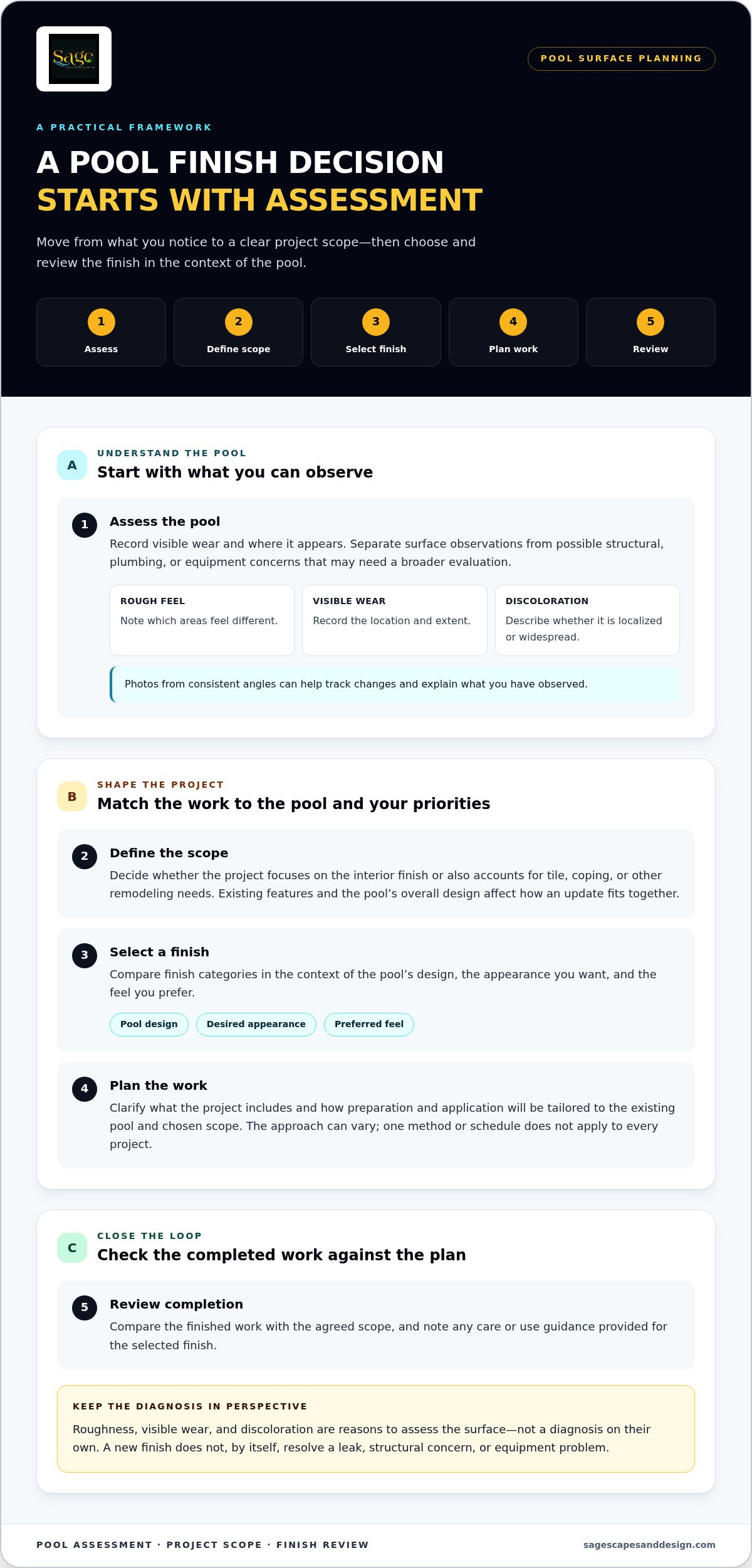
A considered replastering plan doesn’t begin with a colour sample. First, understand the pool’s current condition, then shape the work around its design and your priorities. The steps below offer a practical framework while allowing for the details that make each pool different.
Assess the pool before selecting a finish. The right surface choice depends on the condition of the pool and the scope of the project.
- Assess the pool. Review visible wear and document its location and extent. Separate surface observations from possible structural, plumbing, or equipment concerns that may call for a broader evaluation.
- Define the scope. Decide whether the work should focus on the interior finish or also account for tile, coping, or other remodeling needs.
- Select a finish. Compare finish categories in the context of the pool’s design, the appearance you want, and the feel you prefer. The National Plasterers Council guidelines for pool finishes provide additional industry context for cementitious pool and spa interiors.
- Plan the work. Clarify what the project includes and how preparation and application will be tailored to the existing pool and chosen scope. The approach can vary, so don’t assume one method or schedule applies to every project.
- Review completion. Compare the finished work with the agreed scope and note any care or use guidance provided for the selected finish.
What should a pool assessment establish?
An assessment should describe the visible surface condition and where concerns appear, then distinguish those observations from questions about the pool’s structure, plumbing, or equipment. A rough area may indicate a finish concern, but it does not establish why it developed or rule out other issues. The findings help determine whether replastering is an appropriate focus and whether related remodeling belongs in the plan.
How does project scope shape the replastering plan?
Existing tile, coping, and the pool’s overall design affect how an interior update fits with other planned work. A finish refresh may feel incomplete if nearby tile or coping also needs attention. On the other hand, a sound surrounding design may suit a focused project. Define what is included before selecting finishes so you can compare options in context and plan a coherent renovation.
For Houston homeowners considering a pool replastering service Houston, assessment and scope-setting help align practical needs with the look they want to create. Sage Pools, Scapes & Design connects pool remodeling with a broader design-build perspective, considering the pool as part of the outdoor setting. Explore Sage’s pool remodeling approach as you shape the project around your pool and backyard vision.
Choosing a Houston Pool Finish: Compare Appearance, Texture, and Fit
A finish influences how the pool looks from the patio, how the water reflects light, and how the surface feels in use. Plaster, quartz, and pebble are broad categories to compare, not automatic answers. Your preference matters, as do the existing pool and the project scope. A sample may look compelling on its own but feel different across a full pool and alongside the surrounding materials.
Which finish qualities should homeowners compare?
Start with the visual character and surface feel you want, then consider how they fit your pool’s design. Colour and texture shape the pool’s appearance, alongside the surrounding light and materials. Ask how care considerations differ for the specific finishes under consideration. Avoid assuming that one category is easiest to maintain without project-specific guidance.
| Finish category | Appearance | Texture | Upkeep considerations | Design fit |
|---|---|---|---|---|
| Plaster | Often considered for a straightforward, classic pool interior. | Discuss the expected feel of the selected finish rather than relying on the category name alone. | Ask what care the specific selection calls for. | Consider whether its visual simplicity supports the existing pool and backyard. |
| Quartz | Can offer a distinct visual character; the selected colour and composition affect the impression. | Review a sample and discuss the feel with the project professional. | Clarify care considerations for the particular finish selected. | Compare its appearance with tile, coping, and other visible materials. |
| Pebble | Aggregate creates a more visibly varied surface character. | Surface feel is an important part of the decision, so discuss it directly. | Ask how finish choice shapes project-specific care. | Consider whether the more pronounced visual detail suits the pool’s overall design. |
Use this comparison to identify your priorities, not to declare a universal winner. View samples where possible, compare them with the pool’s existing tile and coping, and discuss how they fit the project. A pool replastering service Houston plan should account for both the finish you prefer and the condition of the pool being renovated.
How can a new finish complement the full backyard?
Look beyond the waterline. The finish can relate to coping, planting, patio materials, and outdoor features, creating either a quiet transition or a deliberate contrast. Pool and Landscape Design brings these choices into one visual conversation. For a Luxury Pool Design or Custom Backyard Design, consider how the pool will look from the home and gathering areas, not only from the water.
A Resort Style Back vision may call for a composed, welcoming atmosphere, but it doesn’t require a particular finish. Choose materials that suit the yard’s character and the way you want to enjoy it. Sage Pools, Scapes & Design brings pool remodeling together with landscape architecture, helping homeowners consider the pool as part of Luxury Outdoor Living rather than as an isolated surface.
Planning Pool Replastering in Houston: Preparation and Local Considerations
A well-planned renovation starts before work reaches the pool. Clear access, agreed project boundaries, and household coordination help everyone understand how the space will be used during the work. For a pool replastering service Houston homeowners should also consider the specific site. Weather exposure, drainage patterns, and nearby outdoor features can inform planning, though conditions vary from yard to yard.
What should Houston-area homeowners organize before work?
Use the planning conversation to align practical needs with the result you want. Walk through the pool area and note what needs to be moved, protected, or kept accessible. Then clarify work areas, responsibilities, and how updates will be shared. Preparation can make the transition from everyday backyard to active project more orderly.
- Plan access: Identify a clear route to the pool and discuss how gates, walkways, and nearby areas will be used.
- Review the surroundings: Note furniture, planters, outdoor features, and other pool-area contents that may need to be moved or protected.
- Set project boundaries: Clarify which parts of the pool and yard are included and which areas should remain available to the household.
- Coordinate at home: Discuss how household members and pets will be kept clear of active work areas, and how outdoor-space use may change during the project.
- Bring useful observations: Record visible concerns and design priorities, such as how you want the pool finish to relate to the coping and patio.
Before work begins, make sure everyone understands responsibilities, access, work boundaries, and how questions or changes will be communicated. This is especially useful if the scope includes more than the pool interior. A written project description gives homeowners and the renovation team a common reference as planning develops.
How can local site conditions shape renovation planning?
Weather exposure is one practical consideration in the Houston area, but conditions vary by season and site. Rain or other weather can influence access and work planning, so account for conditions at the property rather than assuming a fixed schedule. Drainage is also specific to each site. Note where water tends to collect after rain and share that observation as context, not as proof of a pool or drainage problem.
Consider the pool as part of its setting. Nearby planting, hardscape, structures, and access routes may affect how the work area is organized or whether the renovation should be coordinated with other updates. Broader planning can connect a surface refresh with the rest of the backyard without expanding the project by default.
For a renovation that may extend beyond the interior finish, Sage Pools, Scapes & Design brings pool remodeling into a wider design-build perspective. Explore Sage’s pool-remodeling approach to consider how the pool update can fit the surrounding outdoor space.
Make Pool Replastering Part of a Thoughtful Houston Pool Remodel
A refreshed pool surface can be a focused improvement or one part of a more complete backyard vision. The right scope depends on the pool’s assessed condition and what you want from the space. Replastering doesn’t mean every surrounding feature needs an update. It does create an opportunity to consider whether the pool and its setting still work together as you’d like.
When is a broader pool remodel worth discussing?
Consider the whole pool area alongside the surface findings. Tile or coping may also need attention, an existing spa may be part of your renovation vision, or the surrounding landscape may no longer suit how you use the backyard. These goals can make a wider scope worth considering. If the assessment points to a surface-focused project and the rest of the setting meets your needs, additional upgrades may not be necessary.
Separate observed needs from optional design goals. First, identify what the assessment says about the pool and which elements are included in the proposed work. Then consider whether coordinating tile, coping, a spa, or landscape changes would serve your priorities. A pool replastering service Houston homeowners plan this way keeps decisions tied to the project rather than expanding the scope by default.
How does Sage bring the pool and backyard vision together?
Sage Pools, Scapes & Design offers pool remodeling alongside pool design-build, landscape architecture, and complete backyard renovations. This range of services makes it possible to consider the pool in relation to its surroundings, from the hardscape to the way outdoor spaces connect. As a Design-Build Pool Company, Sage brings design and construction into a coordinated project-level conversation, helping homeowners see how individual choices contribute to a unified setting.
Owner-Designed Pools and Boutique Pool Builder express Sage’s design-led perspective. They speak to an approach grounded in thoughtful planning, not a promise about a particular finish or construction method. For a Custom Backyard Design, the pool surface can be considered alongside the landscape and outdoor features, so the renovation reflects both practical needs and personal taste.
Your goal may be a more welcoming place to gather, a refreshed look around an existing pool, or a broader vision for Luxury Outdoor Living. Each starts with understanding what matters most to you and shaping the scope around that vision. Houston-area homeowners can begin a tailored design conversation with Sage Pools, Scapes & Design to explore how pool remodeling and the wider backyard might come together.
Shape the Next Chapter of Your Backyard
A pool renovation can help connect the space with the way you live, whether your plans focus on the pool or extend into the surrounding yard. As you consider a pool replastering service Houston project, look beyond the immediate surface: what would make the finished space feel more welcoming, cohesive, and truly yours?
Sage Pools, Scapes & Design is a locally owned Houston-area design-build firm established in 2017, led by an owner with more than a decade of industry experience. Pool remodeling, landscape architecture, and complete backyard renovations bring the pool and its setting into the same conversation, helping homeowners explore a vision suited to their property and priorities.
Start with a conversation about what you want to change and how the pool fits into the wider outdoor picture. Explore Sage’s pool remodeling and begin planning your Houston backyard vision. With a clear vision and considered design, your backyard can become an inviting setting for the moments ahead.
Frequently Asked Questions
Is replastering the right solution for every damaged-looking pool finish?
No. A worn appearance does not establish that replastering is the only solution. Fading or roughness may justify an assessment, but appearance alone cannot reveal every underlying issue. A change in the finish alongside concerns about pool operation, for example, may call for evaluating more than the surface. Structural, plumbing, or equipment questions need separate consideration. Decide on the scope after the pool’s condition has been evaluated, rather than assuming a new finish will resolve unrelated problems.
Can a pool be replastered without replacing its tile or coping?
Sometimes a project can focus on the pool interior, but whether tile or coping should remain depends on their condition, the existing pool, and the renovation scope. Intact surrounding details may suit a surface-focused update, while worn or damaged edges may prompt a coordinated remodel. An assessment should consider how the pool’s edge and proposed finish meet visually and practically. Don’t assume existing tile or coping can always stay in place.
How long does pool replastering take in Houston?
There isn’t one standard duration that applies to every Houston pool. Timing depends on the pool, the work included, site conditions, and the project approach. A focused interior update may require different coordination from a renovation that also addresses surrounding features. During planning, discuss project-specific sequencing, access needs, and how weather exposure at your property may affect the work. That conversation gives you a more useful expectation than a general timeline.
How much does pool replastering cost in Houston?
The investment depends on factors such as pool size and condition, finish selection, preparation needs, site access, and whether other remodeling work is included. Rather than relying on a broad estimate, compare clearly defined project scopes. Make sure you understand which pool areas and related features are included and how scope changes affect the plan. This helps you weigh finish options against the work your pool may need.
Does replastering fix a pool leak?
Not necessarily. A leak can stem from a cause beyond the interior finish, so a new surface shouldn’t be treated as a leak repair. An appropriate assessment can help distinguish visible finish deterioration from possible plumbing or structural concerns. Note when you first observed a change and where it appears, then share those details during evaluation. A remote description alone can’t identify the source or establish the right repair.
What should I consider when choosing a pool replastering service in Houston?
Look for a process that starts with a clear assessment, explains the project scope in understandable terms, and discusses finish choices alongside related pool features. As you plan a pool replastering service Houston project, consider how tile, coping, or landscape goals fit your priorities. Sage Pools, Scapes & Design brings pool remodeling and design-build planning together for homeowners in Houston, Fulshear, Katy, Richmond, Sugarland, Missouri City, Pearland, Spring, Conroe, Willis, Montgomery, Magnolia, Tomball, Chappell Hill, and Bellville.

Article by
RENE VEREECKEN
Rene Vereecken is the owner and lead designer of Sage Pools, Scapes & Design. With a background in business and graduate studies in Landscape Architecture at Texas A&M University, Rene combines technical design knowledge with a passion for creating exceptional outdoor living spaces. He works directly with every client to design custom pools, landscapes, and outdoor environments tailored to their lifestyle. From the initial design through construction, Rene is personally involved in every project, ensuring thoughtful design, quality craftsmanship, and a seamless client experience.