What does clay soil mean for a pool project in Texas? Because clay can respond to changing moisture, the right starting point is understanding the property rather than applying a standard formula to every yard. Clay soil pool construction Texas homeowners can approach with confidence begins with a site-specific plan.
Clay can expand as it takes on moisture and shrink as it dries, so ground conditions deserve attention before the design is settled. That doesn’t automatically make a pool impractical. It means considering the site, surface drainage, pool placement, and surrounding landscape together. This guide explains why clay matters, what to observe during planning, and how thoughtful design can support a cohesive backyard. Sage Pools, Scapes & Design brings custom pool design and landscape architecture into one coordinated process, shaping an Owner-Designed Pool and Luxury Outdoor Living space around the property and homeowner’s priorities.
Key Takeaways
- Houston-area soil conditions can vary by property, so general advice may not fit your site.
- For clay soil pool construction Texas homeowners should consider water movement and surface drainage as part of the overall plan.
- Clay doesn’t automatically rule out a pool; site-specific conditions should inform design decisions.
- Document known drainage concerns, past yard changes, and other relevant property details before planning begins.
- Coordinating pool design with landscape architecture can help bring the full backyard vision together.
Clay Soil Pool Construction in Texas: What Homeowners Should Understand
Before choosing a pool shape or setting its position in the yard, consider the ground beneath it. Clay is a soil texture, not a verdict on whether a property can support a pool. The practical question is how soil and moisture conditions at that particular site may influence design decisions.
Soil and moisture deserve attention before pool design because ground conditions can respond to changing water levels and vary from property to property. This is the central idea behind clay soil pool construction Texas homeowners should keep in view: local context matters more than a broad label.
What does clay soil mean for a Texas backyard?
Clay soil is made up of very fine particles and can retain moisture. But calling a yard “clay” doesn’t tell the whole story. Soil texture is one part of understanding a site. The ground’s condition, how it varies across the property, and how water moves through or across the yard also matter. Houston-area properties aren’t all alike, so a regional description can’t replace attention to the individual lot.
Why do moisture changes matter when planning a pool?
Some clay soils are expansive: they can change volume as their moisture content changes, swelling when wetter and shrinking as they dry. The degree of change depends on the soil and site conditions, so this general behavior isn’t an assessment of any one backyard. The overview of expansive clay explains the term and its relationship to moisture.
Consider this before settling the design because a pool, its surrounding hardscape, and the landscape are connected parts of one backyard. Planning them together makes it easier to consider the site as a whole, including where paved areas meet planting beds and how surface water moves across the yard. For example, if you’ve noticed water collecting in one area after rain, share where it happens and how often. That observation is useful context, not a substitute for evaluating the property.
Soil terminology can help frame the conversation, but it can’t determine a design on its own. A site-specific approach considers known conditions and the homeowner’s priorities before shaping a pool and its surroundings. Clay deserves attention, but a label alone doesn’t say whether a pool is practical or how a particular site should be designed.
How Texas Clay and Water Conditions Shape Pool Planning
Planning starts by bringing together what’s known about a property, what can be observed on site, and what the homeowner wants from the backyard. These details help guide design questions and identify where a more specific assessment may be relevant. A useful process doesn’t assume every Houston-area lot calls for the same response. It connects the project information to the layout being considered.
Clay alone cannot establish the requirements of a specific pool site. A broad soil description doesn’t prescribe a construction method or reveal every condition at a proposed pool location. Instead, it provides context for a site-specific design conversation, where available information and project priorities can be considered together.
Which site conditions belong in the early conversation?
Start with visible features and property history. Existing grades, the direction runoff appears to travel, places where water collects, nearby structures, and space constraints can all help frame useful questions. Previous yard changes, such as added paving or reworked planting areas, may also provide context. These observations inform planning, but they don’t replace technical assessment of the property.
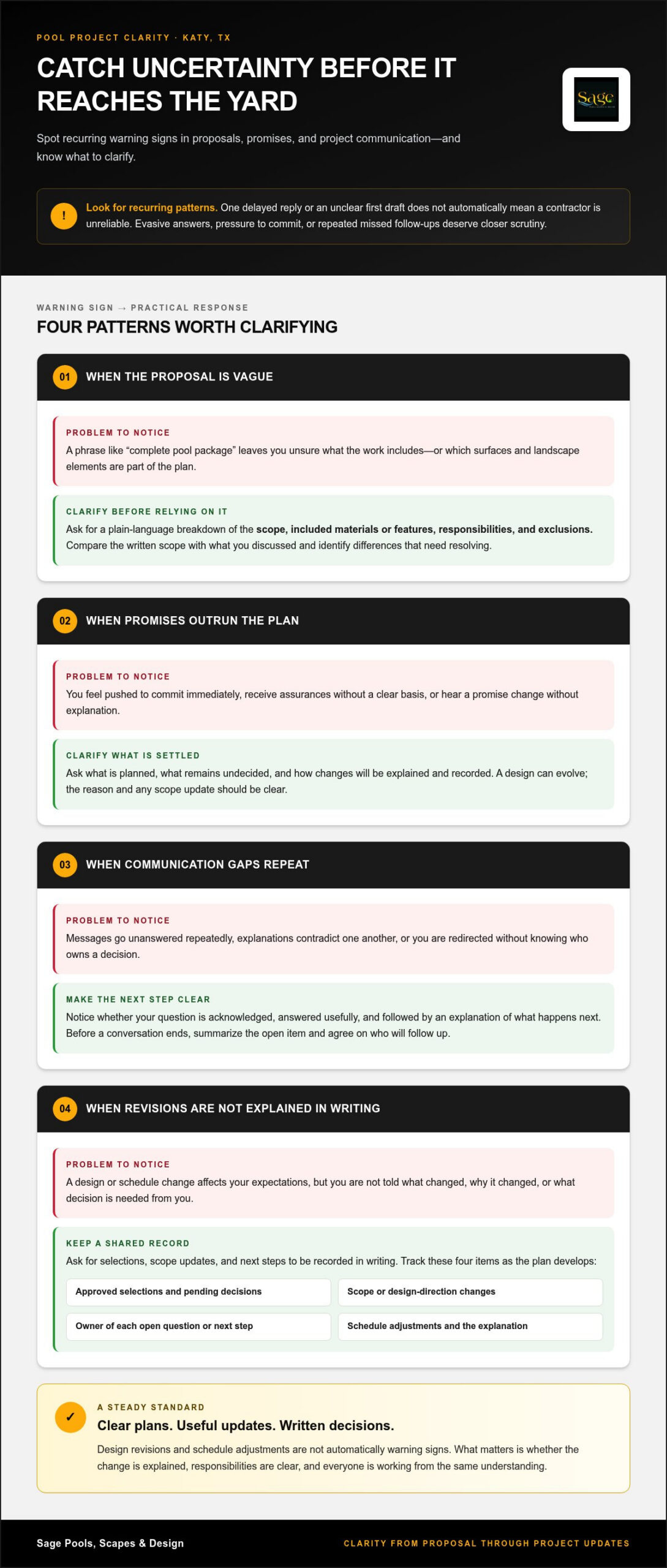
Make observations more useful by noting where and when they occur. If an area seems to hold water after rain, record its location and how often it happens. This doesn’t establish the cause, but it gives the design discussion a clearer reference point and helps distinguish a recurring concern from a one-time observation.
Available project information can then be considered alongside potential pool placement, the desired layout, and how the yard will be used. A narrow access route, an existing structure, or a noticeable change in grade may affect which design questions come first. Which details matter depends on the property. Observations are a starting point, not a universal checklist of required interventions.
How do pool, drainage, and landscape plans work together?
Pool placement influences more than the water’s footprint. It affects where paths, seating, planting, and other features can fit, while surface-water movement is another consideration for the broader backyard plan. Looking at these elements together can help coordinate the pool area with adjoining landscape and hardscape. It’s a design consideration, not a promise that the plan will resolve every drainage concern.
Landscape architecture can connect pool placement with planting areas, outdoor living features, and the character of the property. A Design-Build Pool Company can also coordinate the design and construction stages as part of one project process. For homeowners, that means considering how the full backyard should function and feel while keeping site observations in the conversation.
Sage Pools, Scapes & Design brings pool design and landscape architecture into a connected project process. Explore custom pool and landscape design to consider the site and your overall vision together.
Does Clay Soil Make Pool Construction in Texas Too Risky?
No. Clay soil doesn’t automatically make pool construction impossible or unsafe. It does make site-specific planning important, because a broad soil label can’t show how conditions vary across a particular property or what design decisions that site calls for. The aim isn’t to assume the worst. It’s to replace guesswork with informed planning.
That distinction matters to homeowners concerned about long-term reliability. General information about clay can explain why moisture and ground conditions deserve attention, but it can’t predict how a particular pool will perform. A responsible design conversation considers the property’s available information and relevant conditions before drawing conclusions about suitability or construction needs.
What can and cannot be concluded from the word “clay”?
“Clay” describes a soil texture, not a complete site assessment. It doesn’t reveal whether conditions are consistent across the yard, how moisture behaves at the proposed pool location, or what factors may affect the design. In Houston and surrounding communities, one property’s conditions shouldn’t be assumed to match another’s. A soil label is a starting point for questions, not a verdict.
For example, two backyards described as clay may differ in grade, prior landscaping, nearby structures, or visible water patterns. Those differences can shape what deserves closer attention during planning. A clay description by itself doesn’t establish that a pool will crack, shift, or fail. Those outcomes shouldn’t be treated as inevitable; conclusions about a specific site require information about that property.
Nor does a general article establish a particular construction method. No pool type or technique should be presented as a universal fix for soil-related concerns. The appropriate design decisions depend on the actual site and project information, rather than a one-size-fits-all rule. This approach gives homeowners a more useful basis for discussing feasibility without turning uncertainty into alarm.
How should homeowners think about long-term performance?
Think of durability as the result of informed decisions throughout planning and construction, not as a promise based on a soil label. Relevant site conditions can inform design choices, and those choices should fit the property and intended backyard. If information raises a question, address it during project planning rather than ignoring or exaggerating it.
Homeowners can contribute by sharing what they know about the property: past yard changes, recurring wet areas, or visible changes in the landscape. These details don’t diagnose a problem, but they can help create a clearer picture of the site. A considered pool and landscape plan also keeps the surrounding hardscape and outdoor spaces in view, rather than treating the pool as an isolated feature.
For clay soil pool construction Texas homeowners should take a measured view: clay calls for attention, but it doesn’t decide the outcome on its own. Property-specific information and professional design decisions are needed to draw conclusions about a site. No general guide can predict an individual pool’s long-term performance, but a thoughtful process can turn the right questions into a design grounded in the property.
A Practical Planning Framework for a Pool on Texas Clay
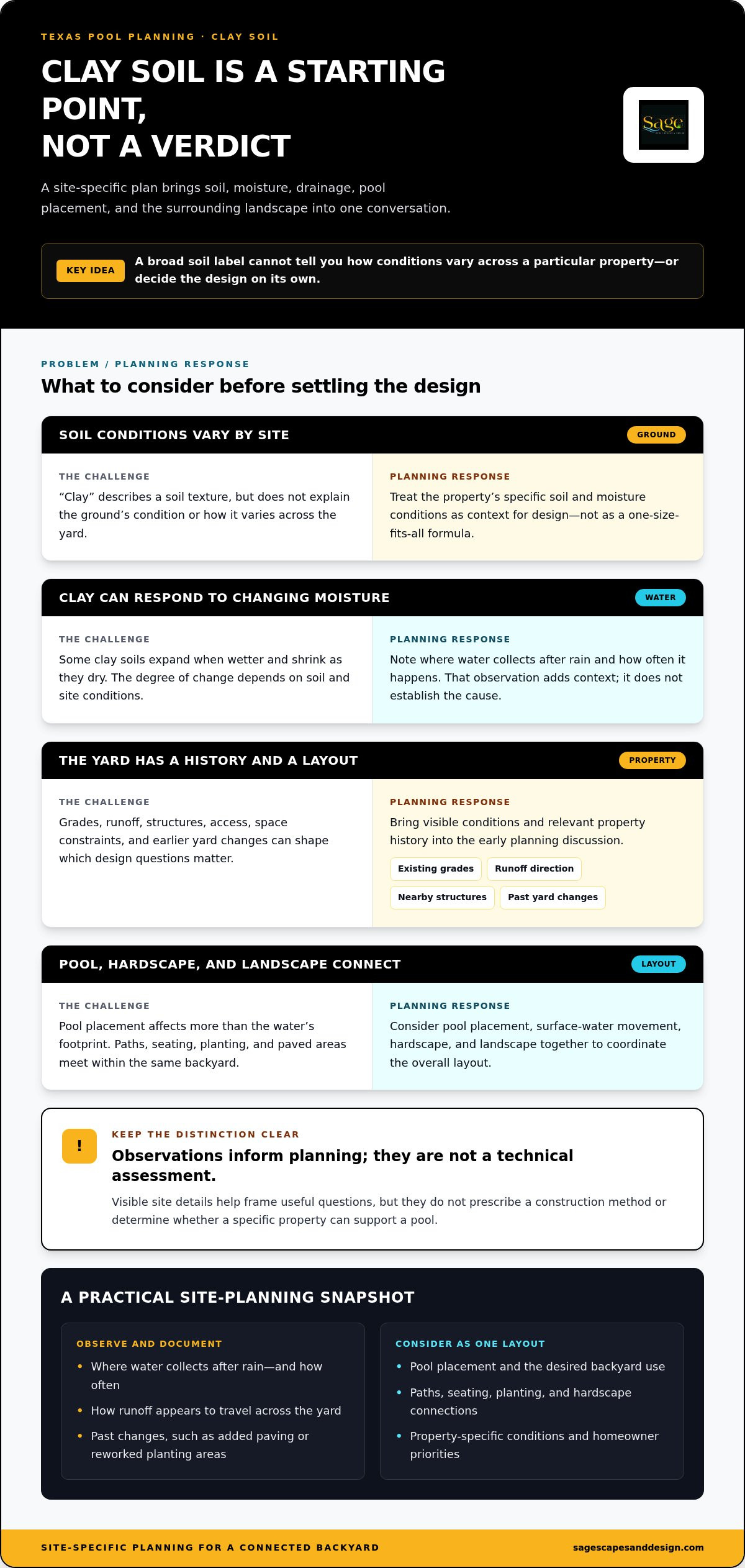
A clear planning process helps turn concern about soil into useful project questions. For clay soil pool construction Texas homeowners can start with what they know about the property, then bring those details into design and construction planning. The observations you collect won’t replace a technical assessment, but they can make early discussions more specific.
What should homeowners observe and share before design?
Before design begins, note visible runoff patterns, low areas, existing hardscape, and yard concerns that have come up over time. If water tends to collect in one spot after rain, record where and when you’ve noticed it. Gather relevant property documents or prior site information if available. These clues help frame questions; they don’t diagnose soil conditions or substitute for project-specific assessment.
Use those observations as the first part of a simple planning sequence:
- Document the site. Gather notes, photographs, and relevant property information. Include previous yard changes and known drainage concerns.
- Discuss priorities. Clarify how you want to use the pool and backyard, including the space needed for circulation, seating, planting, or other features.
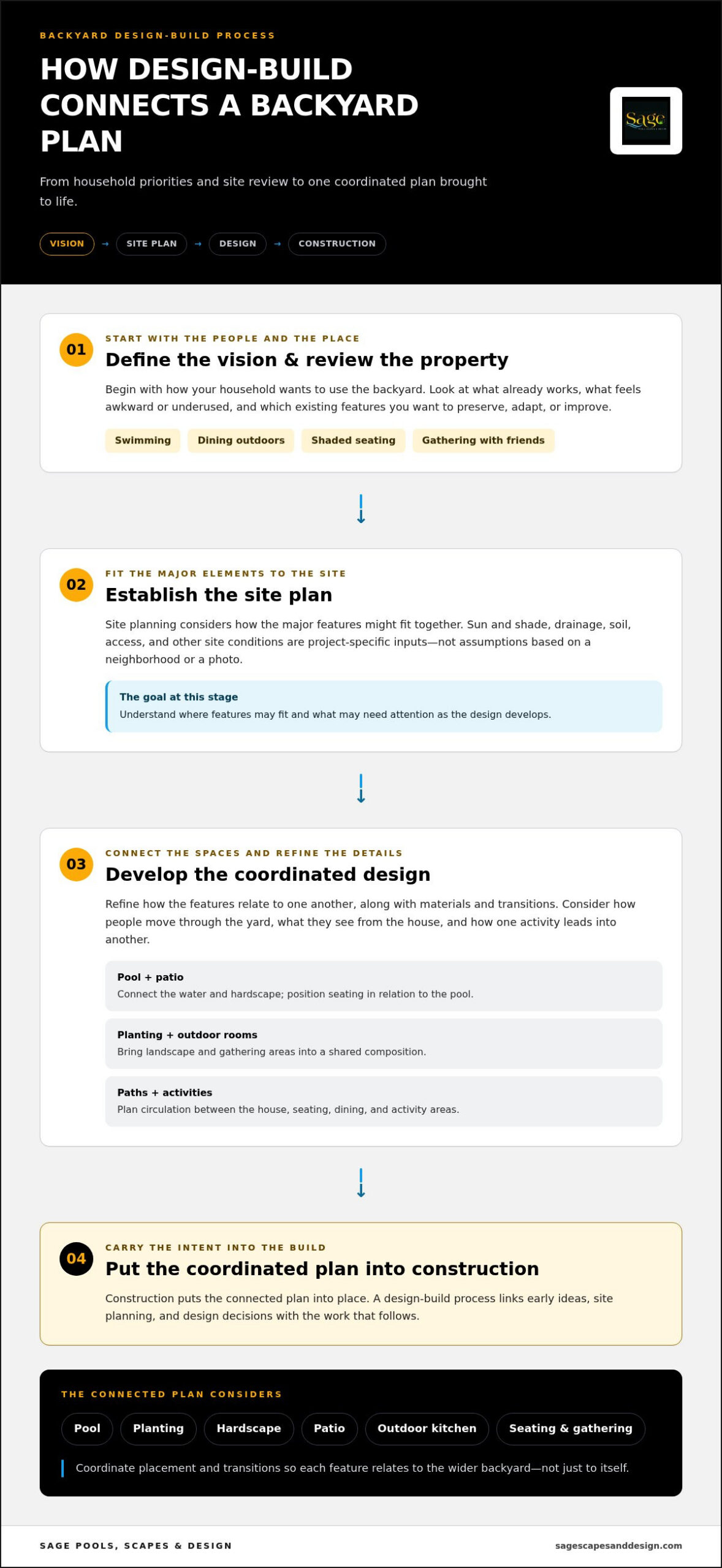
- Coordinate the design. Consider pool location, hardscape, landscape, and outdoor living elements as connected parts of the plan.
- Review project planning. Use available site information to guide project-specific technical assessment and construction decisions. Avoid assuming that a solution used elsewhere will suit your property.
This order keeps the process grounded. A low area or existing patio, for example, may affect which layout questions deserve attention, while your preferences help determine how the pool should relate to the rest of the yard. The significance of each observation depends on the site, so share useful context rather than drawing technical conclusions from it yourself.
How does design-build planning connect the decisions?
A pool plan doesn’t stop at the water’s edge. Pool placement shapes the space available for paths, planting, and backyard features, so coordinating these elements during design can help the overall composition feel intentional. Sage Pools, Scapes & Design is a Houston-area design-build firm that manages projects from design through construction, connecting Custom Backyard Design with Pool and Landscape Design in one coordinated process.
Homeowners comparing pool categories may also find the separate educational article “Gunite vs. Fiberglass Pools: Which Is Best for Houston’s Soil in 2026?” relevant to that narrower question. A pool-type comparison is distinct from evaluating a specific property: neither a category label nor a general article can determine the technical decisions a particular site requires.
Bring your property observations and backyard priorities into a coordinated design conversation. Start planning your custom pool and backyard with Sage Pools, Scapes & Design.
Designing a Texas Clay-Site Pool with Sage Pools, Scapes & Design
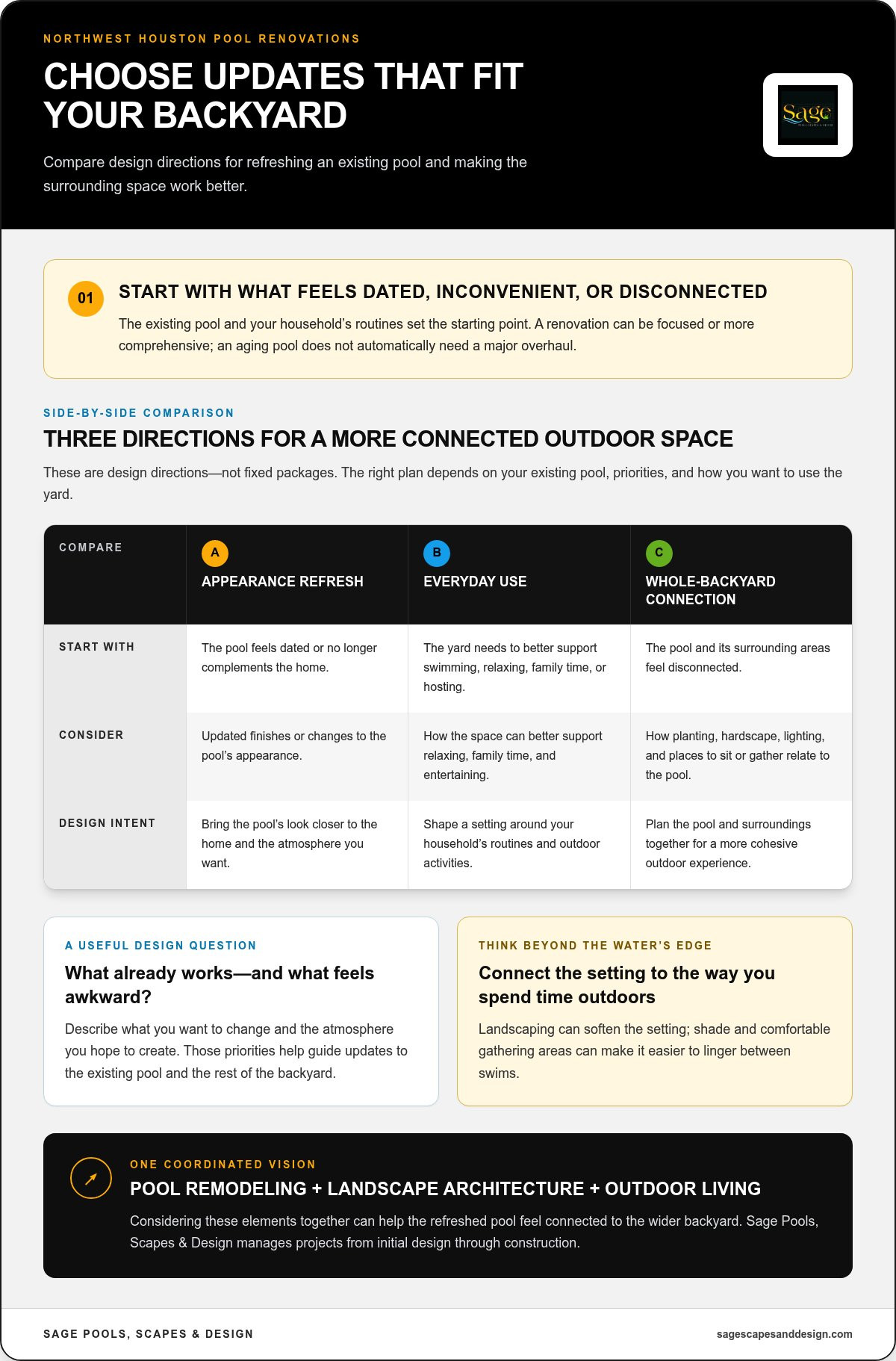
Understanding the site is the first step. The next is shaping a backyard that feels considered from the pool outward. Sage Pools, Scapes & Design is a Houston-area design-build firm offering custom pool design, landscape architecture, and backyard renovation as a coordinated project. The plan can reflect the character of the property and the homeowner’s priorities.
How can the pool become part of a cohesive backyard?
Picture more than the pool itself. Its placement influences how paths connect the home to the water, where planting can soften the edges, and how outdoor living areas relate to the overall layout. Considering these elements together helps the backyard read as one composition rather than a collection of separate additions. The plan can also account for site observations, including visible grade changes and how surface water appears to move.
Luxury Outdoor Living and Luxury Pool Design describe an approach to shaping the experience and appearance of a space, not a promise of a particular outcome. As a Boutique Pool Builder, Sage brings a tailored design perspective to projects, connecting the homeowner’s vision with pool and landscape architecture. Owner-Designed Pools can also reflect a collaborative process, with the homeowner’s preferences informing the design conversation.
A broader backyard renovation may also involve how the pool relates to existing or planned outdoor features. Homeowners considering the full transformation can explore the ideas in “Backyard Renovation Contractors Houston” alongside their pool plans. Together, these considerations help clarify how a pool, landscape, and outdoor living areas can belong to one cohesive vision.
What does a design conversation help bring into focus?
A thoughtful design conversation connects three things: what matters most to the homeowner, what is known about the site, and the atmosphere the finished backyard should create. Perhaps the priority is a welcoming place to gather, a quiet setting for unwinding, or a layout that makes the most of the available yard. Sharing those preferences early gives the design process a clear point of reference.
Site context belongs in that discussion, too. Known drainage concerns, past yard changes, existing structures, and visible constraints can inform the questions considered as the project takes shape. They don’t, by themselves, establish technical requirements. Site-specific decisions should follow from information relevant to the property and project, rather than assumptions based on a general description of Texas soil.
Sage’s design-build approach carries the project from design through construction, keeping the pool and surrounding backyard in view as plans develop. “Resort Style Back” can describe the vision a homeowner brings to that conversation; the design itself should respond to the actual site and personal priorities.
Bring your ideas and property context into a welcoming design conversation. Start envisioning your custom pool and backyard with Sage Pools, Scapes & Design.
Shape Your Backyard Vision Into a Thoughtful Plan
Your next step can be a conversation about what you want the backyard to make possible, from quiet moments outdoors to time with family and friends. Bring the details you know about your property and the ideas you’re still shaping. Together, they can help turn a broad vision for clay soil pool construction Texas into a project plan grounded in your site and priorities.
Sage Pools, Scapes & Design is locally owned and was established in 2017. The firm is led by an experienced architect and designer with more than a decade of industry experience, bringing a considered design perspective to custom pools and outdoor spaces.
A well-planned backyard begins with the right questions and grows through thoughtful decisions. Explore the possibilities for your custom pool and backyard, and take the first step toward a space that feels distinctly yours.
Frequently Asked Questions
Can you build a pool on clay soil in Texas?
Yes, clay soil doesn’t automatically prevent a pool from being built. Whether a particular yard is suitable depends on its site conditions and the design decisions those conditions call for. For clay soil pool construction Texas homeowners can bring property records, known site concerns, and backyard priorities into early planning. That gives the project team a clearer starting point for identifying what additional information may be relevant to the property.
Does clay soil make a swimming pool more likely to crack?
Clay alone can’t predict whether a pool will crack. Some clay soils change volume as moisture conditions shift, but the presence of clay doesn’t mean damage is inevitable. Pool performance depends on the actual site and the design and construction decisions made for it. If you notice cracks or movement in existing paving or other yard features, describe where and when they appear. Those observations provide context, not a diagnosis.
Does Houston clay soil expand when it gets wet?
Some expansive clay can swell as it absorbs moisture and shrink as it dries, but the phrase “Houston clay” doesn’t describe every property’s soil behavior. Moisture patterns can also differ across a yard. One area, for instance, may receive more runoff or irrigation than another. That example can help frame useful questions, but it can’t establish how soil beneath a proposed pool will respond. That requires site-specific information.
How does drainage affect pool construction on clay soil?
Drainage matters because surface-water movement is part of the site context around a planned pool. Where rainwater travels or collects may be relevant when considering pool placement, adjacent paving, and landscape features. A wet patch alone doesn’t identify its cause or dictate a particular drainage solution. Share recurring observations during planning so they can inform the project discussion, rather than assuming one standard approach will suit every Houston-area backyard.
What should I know before building a pool on Texas clay?
Start by gathering useful context, not by choosing a construction method based on a general soil label. A property plan, records from earlier yard work, and notes about recurring water issues can make planning conversations more precise. Also think through how you want to use the pool and surrounding space. Technical assessments and construction decisions should be specific to the site and project, not borrowed automatically from another backyard.
Is clay soil the same across Houston and the rest of Texas?
No. A broad regional label doesn’t mean every property has identical ground conditions. Sites in Houston, Fulshear, Katy, Richmond, Sugarland, Missouri City, Pearland, Spring, Conroe, Willis, Montgomery, Magnolia, Tomball, Chappell Hill, and Bellville can’t be assessed from location alone. Even nearby yards may have different histories and site features. Treat local context as a reason to ask property-specific questions, not as a substitute for evaluating an individual lot.
Can pool and landscape design be planned together for a clay-soil yard?
Yes. Coordinating the pool layout with landscape architecture can help account for how paths, planting areas, seating, and other backyard features fit around the water. For example, a homeowner planning an outdoor kitchen can consider how it relates to pool access and the overall yard arrangement during design. This integrated approach supports a cohesive project, while site-specific technical decisions remain grounded in the property’s actual conditions.

Article by
RENE VEREECKEN
Rene Vereecken is the owner and lead designer of Sage Pools, Scapes & Design. With a background in business and graduate studies in Landscape Architecture at Texas A&M University, Rene combines technical design knowledge with a passion for creating exceptional outdoor living spaces. He works directly with every client to design custom pools, landscapes, and outdoor environments tailored to their lifestyle. From the initial design through construction, Rene is personally involved in every project, ensuring thoughtful design, quality craftsmanship, and a seamless client experience.